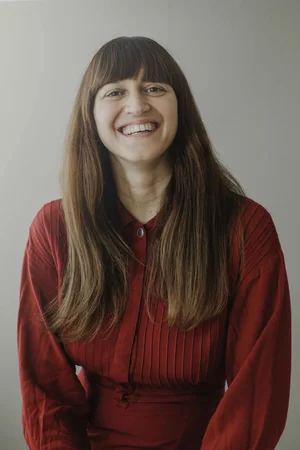
Home Is Where You Are Allowed To Feed And Be Fed.
I have been writing this mentally since June. Every thought on a different subject, none of them ready. And somewhere along the way I started asking myself a question I did not want to ask: for what?
My last piece cost me almost 24 hours.
With AI, I could write something similar in 10 minutes. No new followers. No new clients. So — for what, again?
And then I realised: I am not writing for the metrics. It would be funny if I were, considering my actual numbers — they are like Stonehenge. Stone dolmens that just won't budge.
I am writing because I missed this. Not the writing — or not only the writing. I missed being inside my own thoughts with nobody listening.
That is why I am here (or maybe why I come back to writing).
From June until almost yesterday, I have been living and teaching at Alchemy Academy in Bali. Last year felt different — more organic, a nicer balance between teaching and everything else I am building. This year the same hours seemed to stretch differently. I did things. Good things, I think. But everything took longer than expected and the results felt less clear. I am still not sure why.
What I do know is that teaching here is not really about cooking. Cooking is just the excuse — a space to talk, to reflect — about who we are, about what we are made of, about the connection between what we eat and how we live. Especially in COOKED Alchemy Level 2, where the question on the table is always the same: who are you — and who do you want to be?
I love that question. Even when — especially when — I do not have a clear answer myself. But teaching always brings me clarity in other areas of my life. And for that I am deeply grateful.
In parallel, from this distance, I have been watching what is happening in my own country. Spain. I will come back to this at the end. It matters to me more than I know how to say right now.
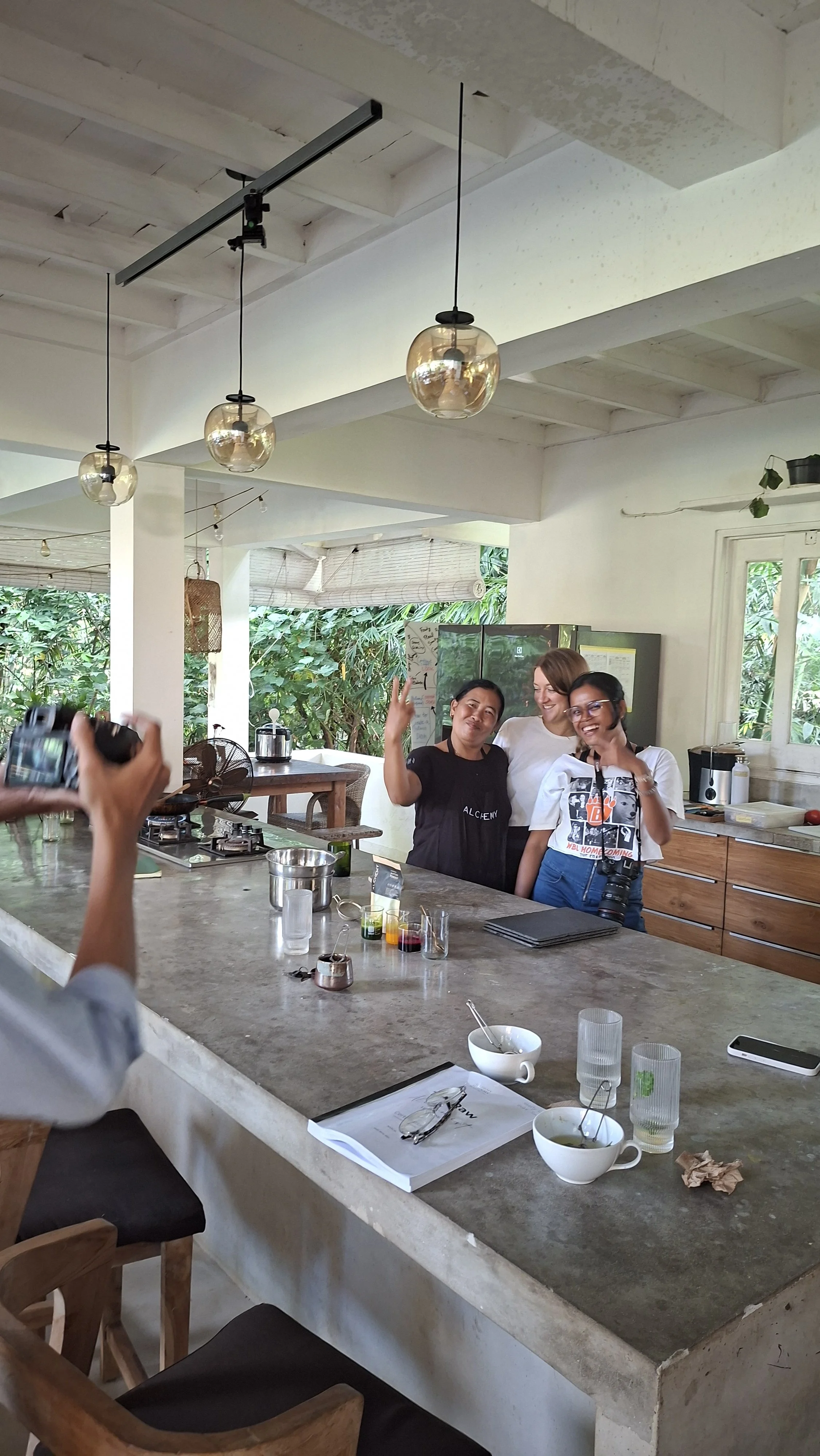
Made and the Paon
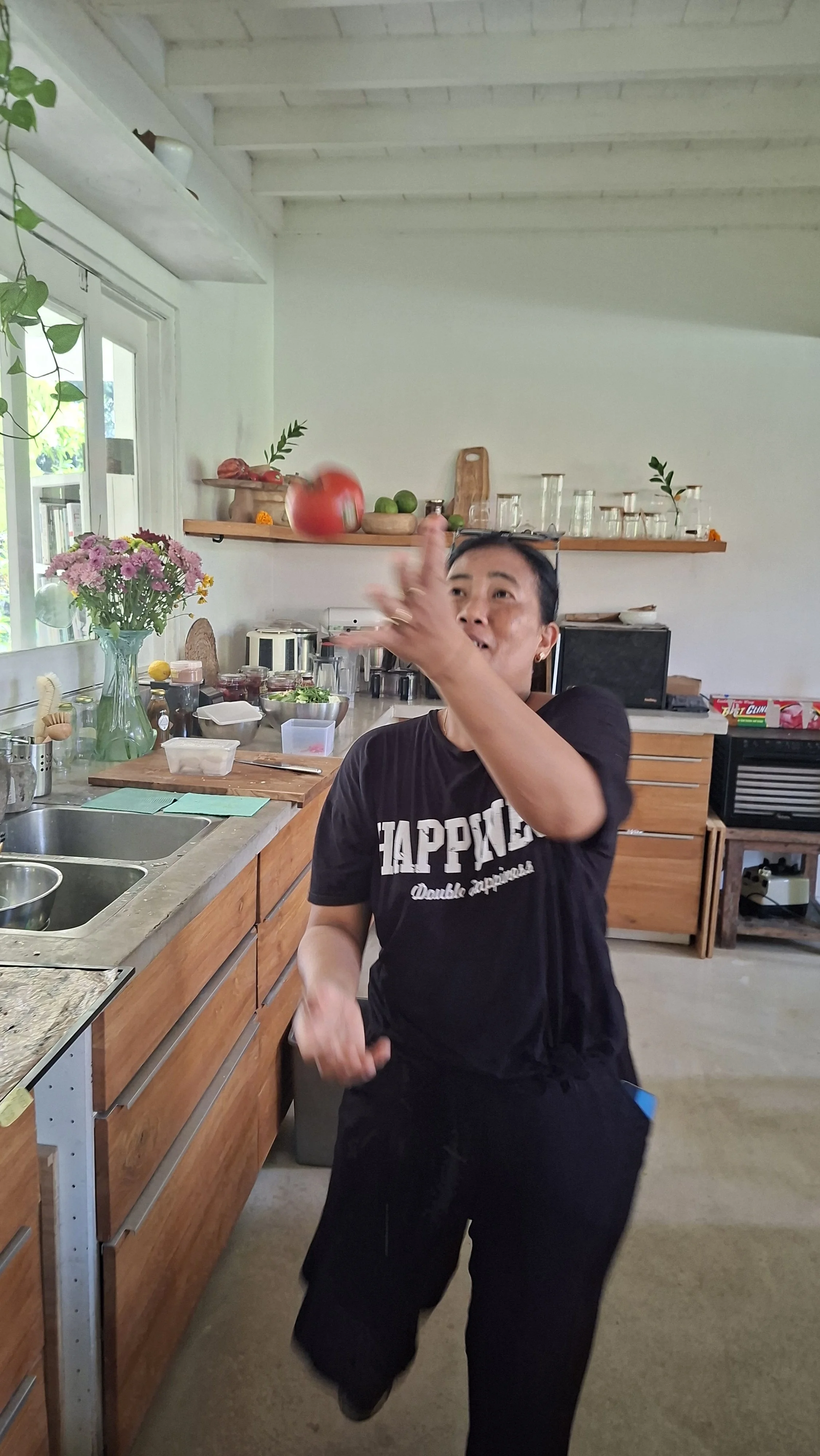
One of the experiences I look forward to most here is the day we spend with Made Masak.
We have done it a couple of times already but every time feels completely new. I arrive as a teacher and leave as a student — and that shift alone feels like a gift.
She takes us to a food forest in the mountains, far from where we are based. The air feels lighter there. You are surrounded by local families, open space, and a traditional Balinese kitchen — the Paon.
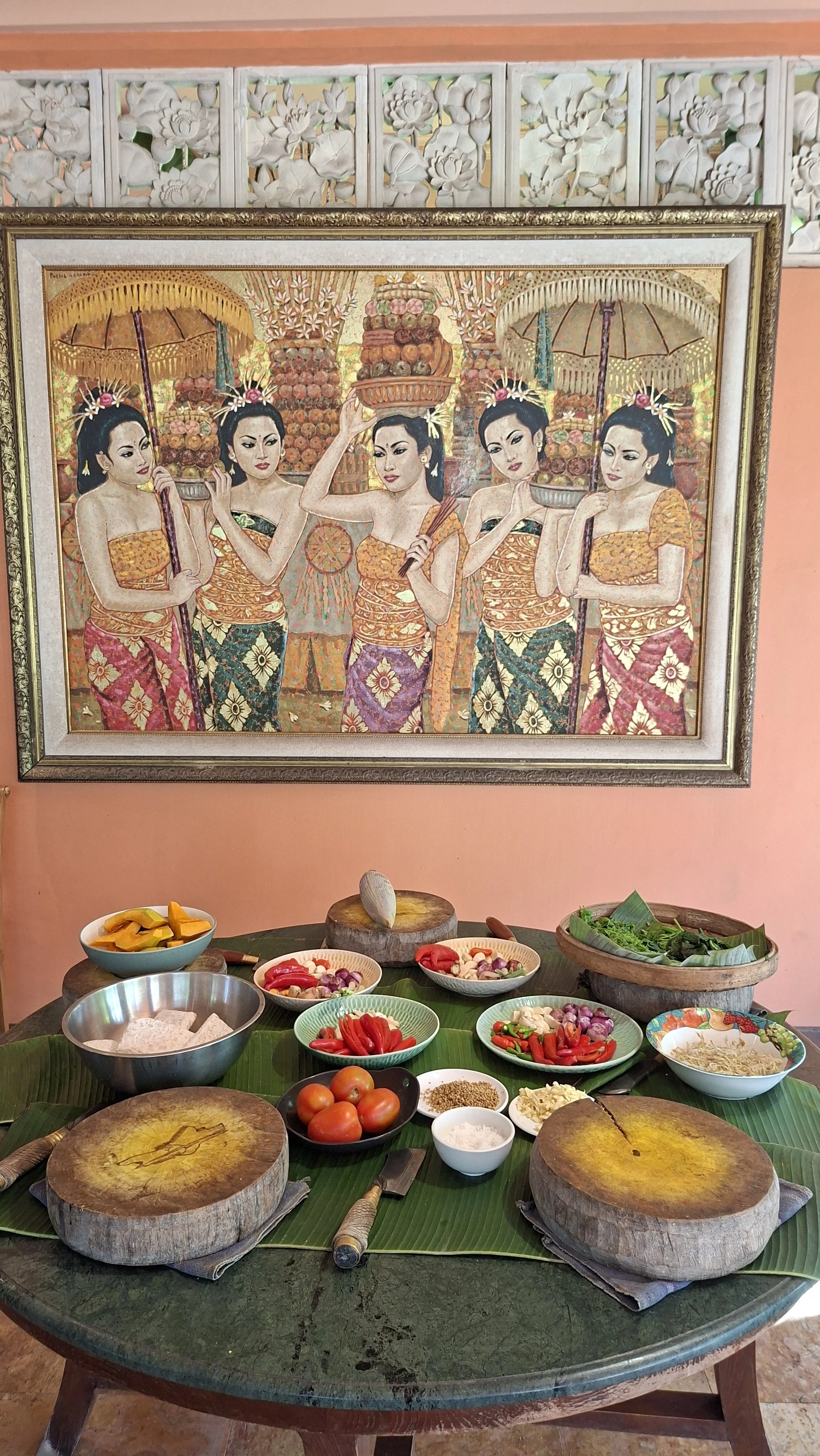
The Paon is not just a place to cook. It is an integral part of the Balinese compound — imbued with philosophy, tradition, and a spatial logic that connects the kitchen to the body, to the gods, to the land. Every element has a place and a meaning. The kitchen deity of fire — Brahma — faces south. The water god Wisnu lives in the terracotta vessel in the corner. Fresh offerings sit on top of both. Nothing is accidental. Nothing is separate.
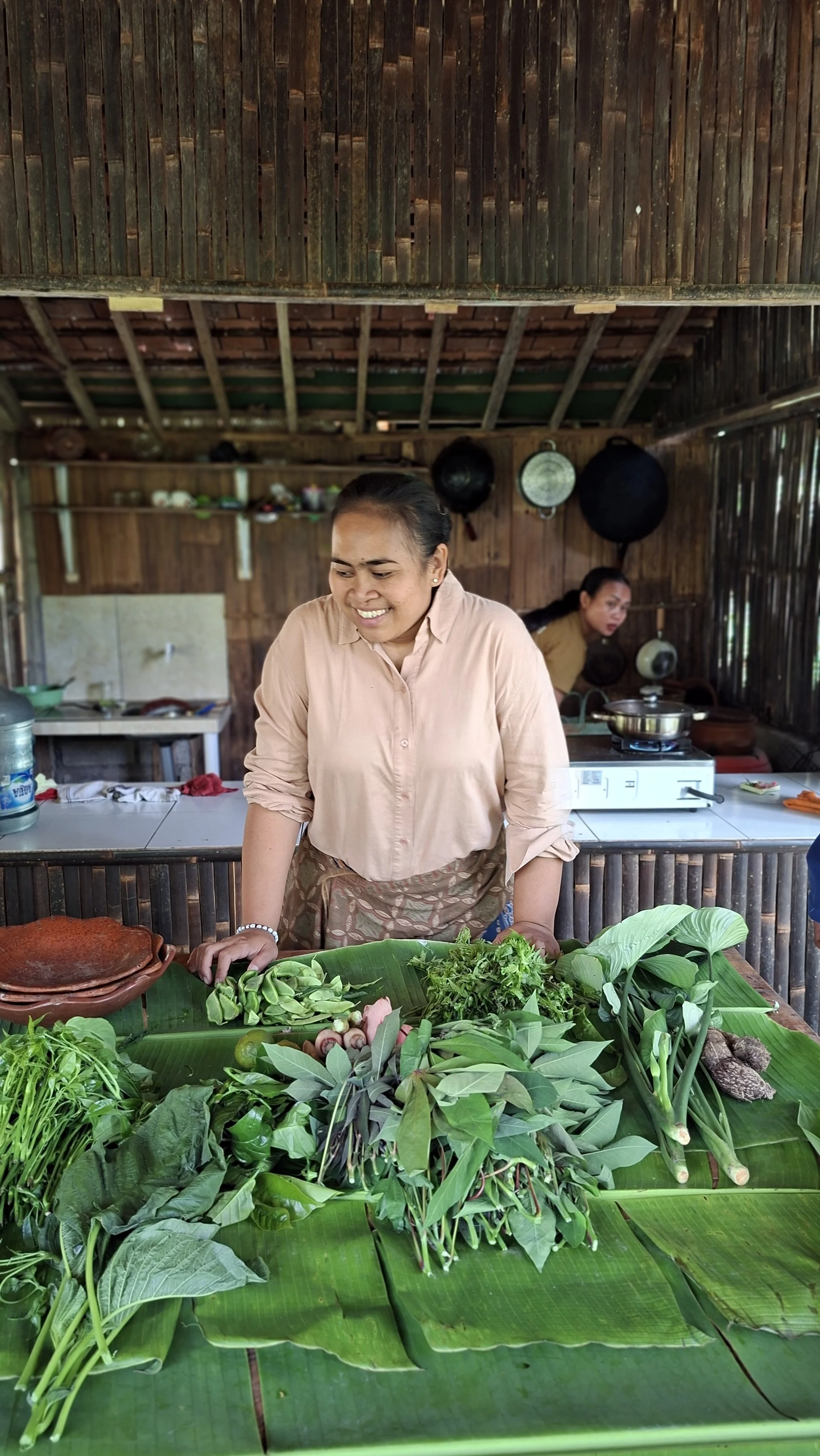
And then there is Made herself. She is more than a cook. She is someone who knows exactly where she comes from — and that rootedness gives her a kind of freedom I find hard to describe. She is strong, funny, and always smiling. Everything seems natural for her. A few weeks ago she represented Bali at the Slow Food movement in Milan. She is creating experiences that show what is possible — writing the future of food by living fully in her present.
With me, everything looks more painful. I do not say that with self-pity. I say it with curiosity. Because watching Made made me ask a question I have been carrying ever since:
What are my roots? What is my heritage? And what do I do when the answer is not what I expected?
The Country I Come From
I never liked cooking until I started working in hospitality
I enjoyed eating — but without thinking about anything beyond feeding myself. I grew up in Spain and did not really cook until my mid-thirties. Which means I have no connection to the land, no local ingredients I grew up with, no food heritage I can point to and say: this is where I come from.
When I joined the hospitality industry I did it from passion and love — knowing absolutely nothing. My third job in hospitality was a revelation in that sense. David, the owner, still reminds me that I did not know how to cook buckwheat when I arrived. And it is true. I remember it now and I laugh. But at the time it was also completely real: I was learning everything from scratch, from love, with no map.
If my food had to represent a country, it could not be Spain. Not even the Canary Islands. Let me explain myself here a bit more. Yes, I love papas con mojo, puchero and a good potaje. I grew up eating these dishes — but as part of a deal: they cooked, I sat down, I ate (all of it, until the last drop).
And this became very clear recently when we were writing our students' project feedback forms. We had students from China, Thailand, and India — huge gastronomic cultures, recognised everywhere. And what we were teaching them was genuinely different from what they normally cook and eat at home. Watching them navigate that distance made me realise: I have always been navigating that same distance. I just never named it. Spanish food culture is huge as well — but remember my relationship with food.
If I have to choose a country or a gastronomic culture where I feel I belong, it would probably be one where we cook with plants and not animal products — a place that has no flag, no anthem, no grandmother's recipe. A movement that started, in my own culinary story, from a love for animals and health, and later turned into a career thanks to one of many courses I did at the time at the Matthew Kenney culinary school (lucky me — or not — I was also one of the culinary trainers at the Barcelona pop-up school). Different places and businesses have shaped the way I cook in ways that also have no single name.
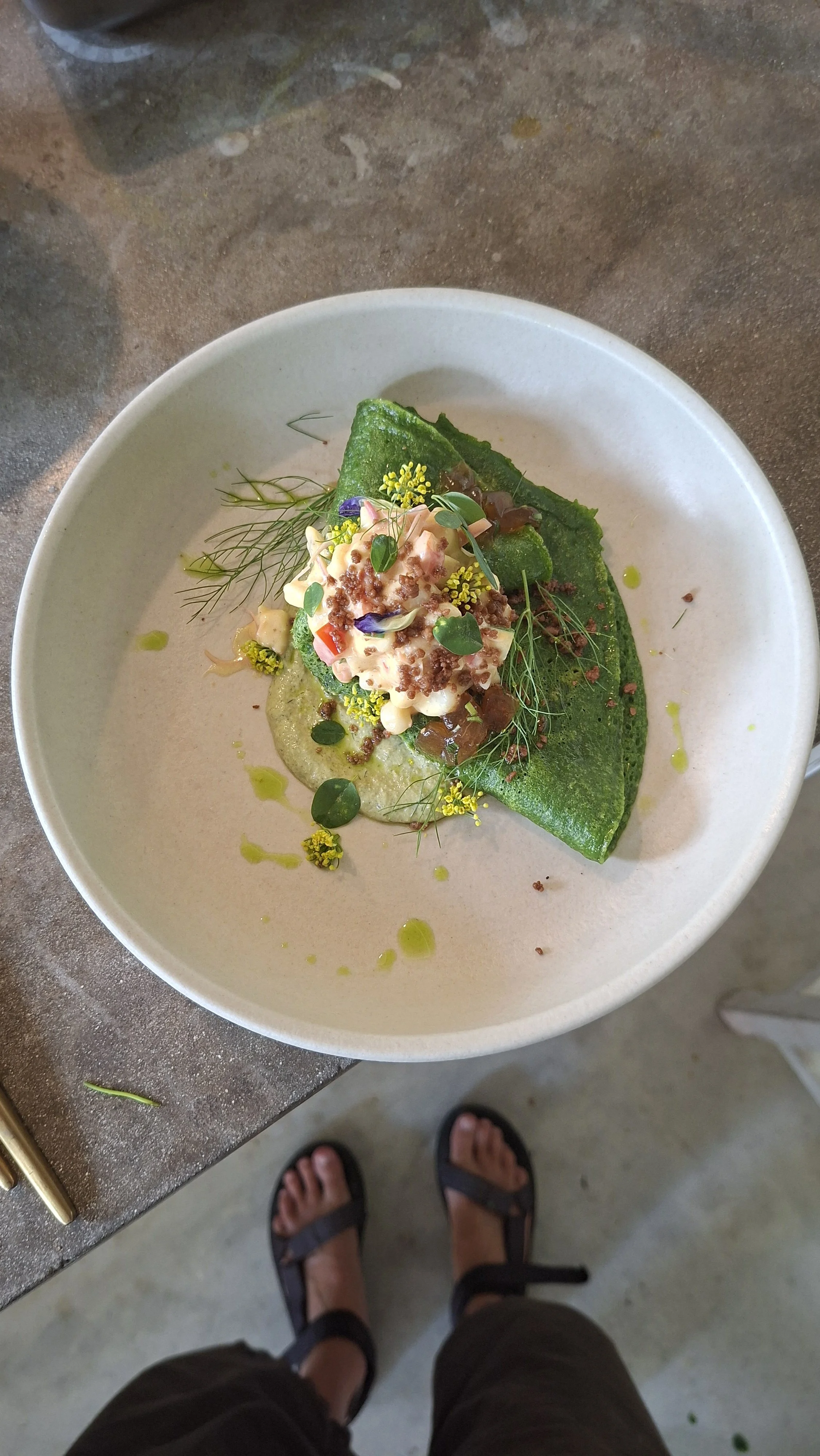
We need to think of a better name… Maybe you can think of one? For whom? For our country, the plant based one!
It is the only country without a passport, without borders, without a flag.
It has no traditional dishes (please, avocado toast, no! We banned this! she said while enjoying her toast) — or rather, it has all of them, borrowed and transformed. Its cuisine does not belong to any land in particular. It grew out of a movement, a question, a decision made in someone's thirties: what if we started from scratch?
Its citizens come from everywhere — like the students at Alchemy Academy. They found each other in kitchens, in food forests, in school spaces where cooking is an excuse to talk about something bigger. They share not a territory but a set of values: that food is never just food. That what surrounds the table matters as much as what is on it. That nourishment — real nourishment — includes curiosity, connection, and the courage to ask better questions.
This is not a country you are born into. It is one you choose.
One of our students said something I keep thinking about: how beautiful it was to see people from so many different places, backgrounds, desires and experiences spend two weeks together — and feel connected. Not despite their differences. Because of them.
That, I think, is what this country is.
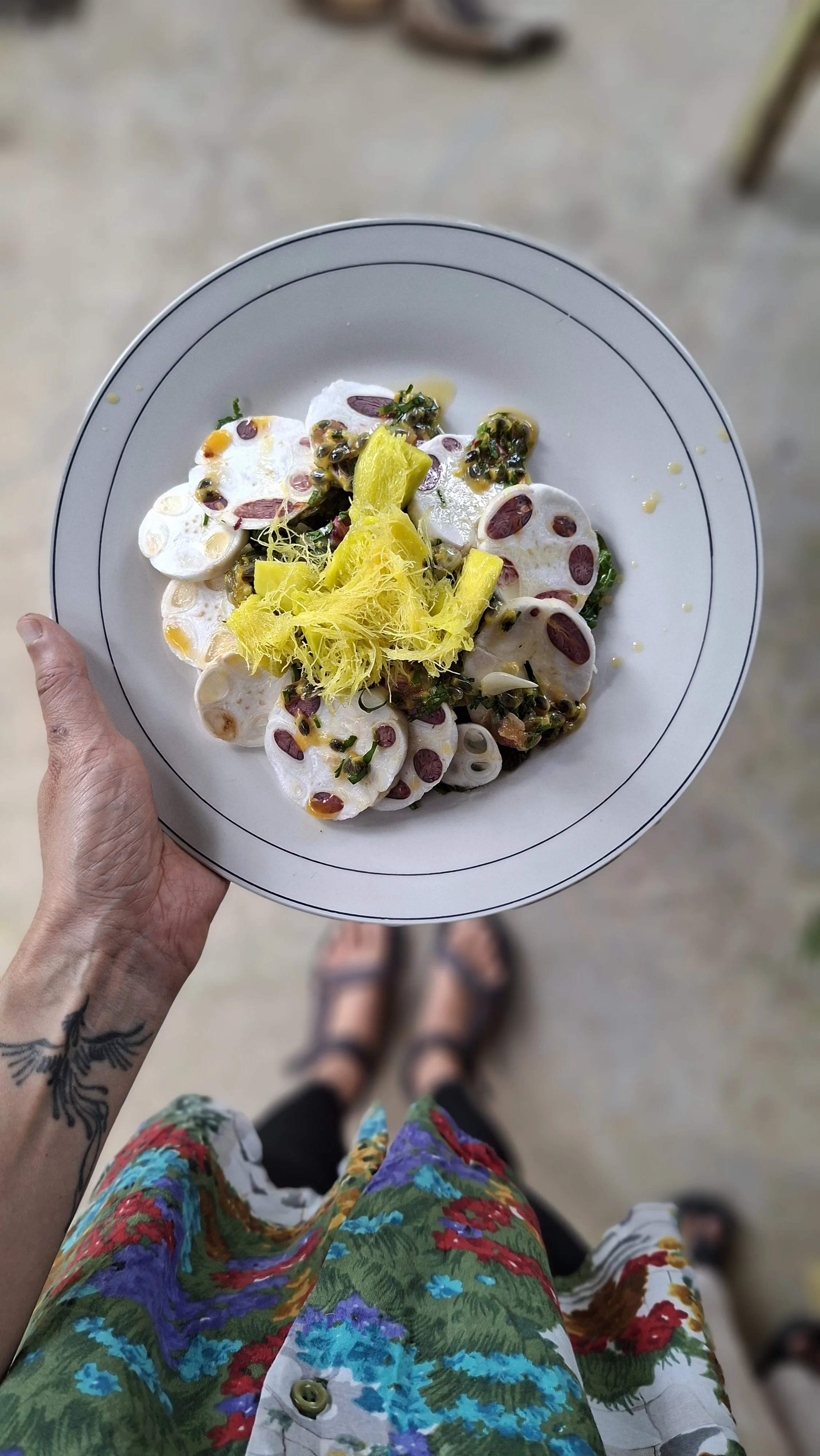
These are some of its people. Some of its places. Some of its dishes.
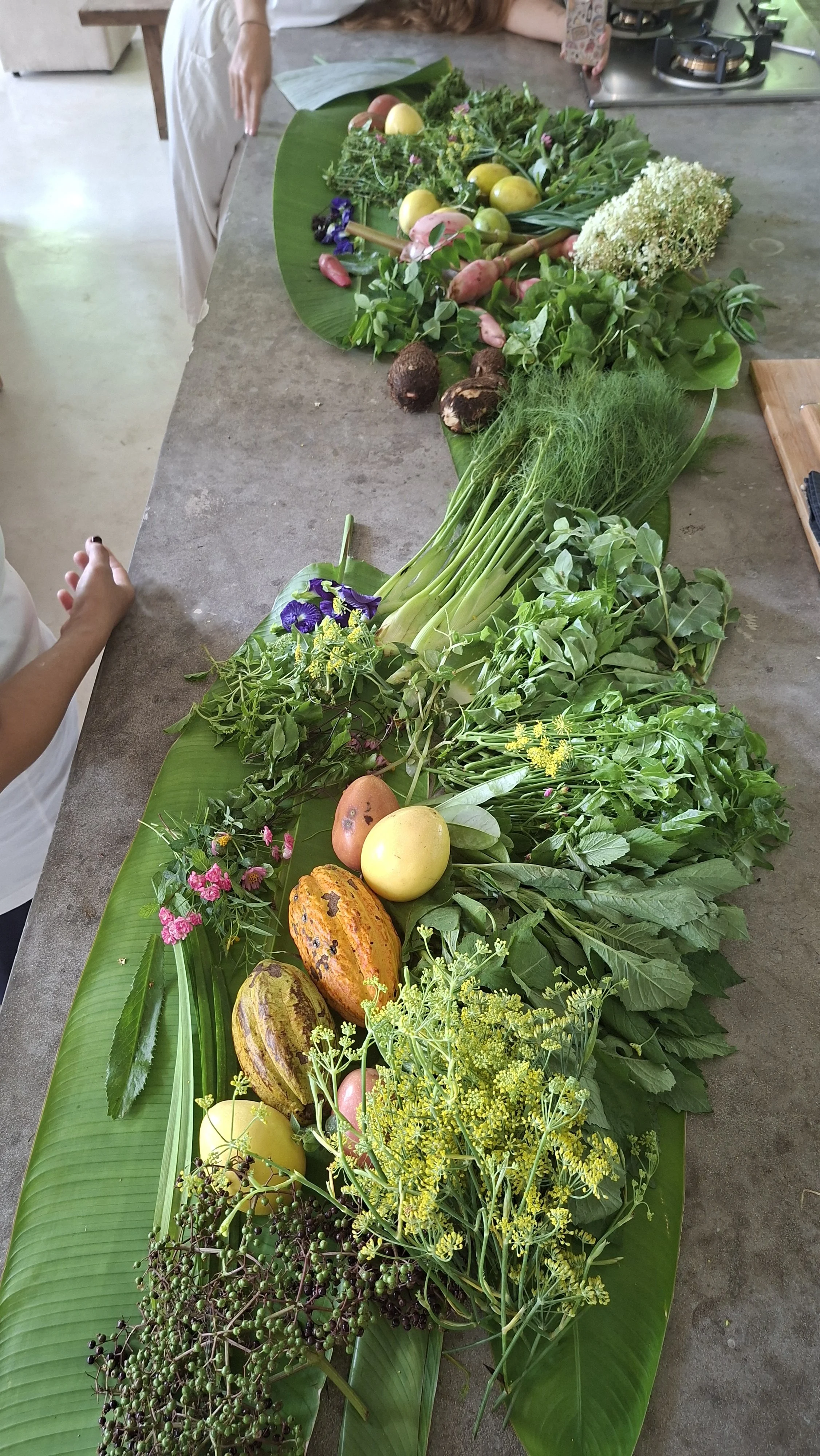
For most of the students, there was a before — a rich food culture to return to or depart from.
For most of the students, there was a before — a rich food culture to return to or depart from. But what I noticed was that their deep connection to their own culinary heritage sometimes made it harder to understand Plant Based food as a country in itself. Not a diet. Not a trend. A complete culinary world with its own logic, its own techniques, its own philosophy.
And watching them navigate that gap made me see my own from the other side. I have a strong food culture — I am Spanish, from the Canary Islands, from a family of great cooks. But I was not interested in that when I had the chance. I grew up at that table without understanding what I was inheriting. And by the time I started cooking, I had already missed the connection.
Watching Made, that absence bothered me again. Not with regret — with curiosity. What do you do when you miss the inheritance that was always there?
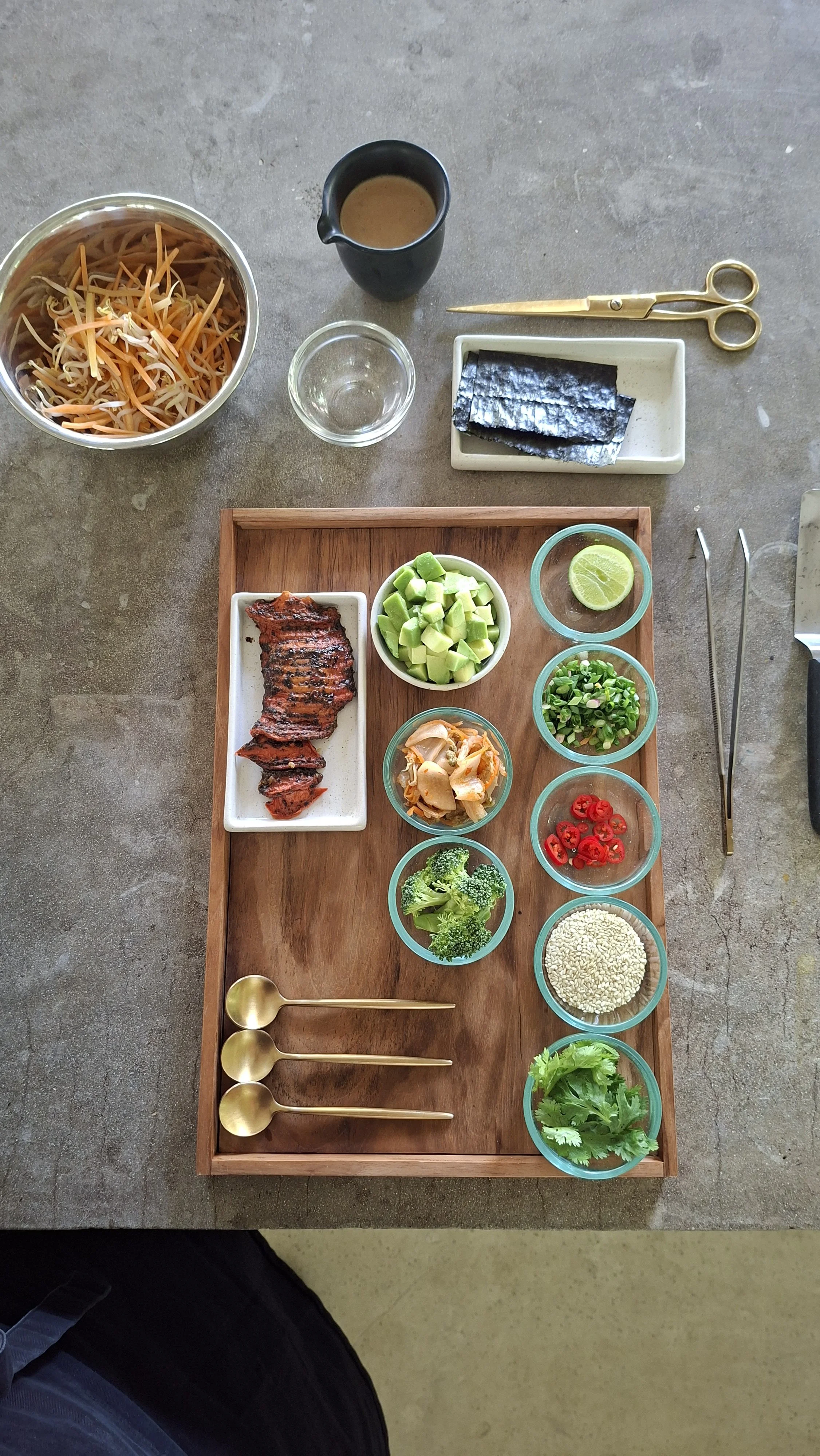
The Place Where Everything Happened
But then I remembered something. I may not have paid attention to the food — but I always paid attention to the place.
The kitchen was never just a room in my family home. It was where everything happened. The good things and the bad things. The Christmas dinners where my grandmother, my mother and my aunty fought over who would cook — and then fought again over who would clean. My sister, my cousins and me making noise in the corner, going quiet only when our help was needed, pretending we were not there.
The kitchen was never just a room in my family home. It was where everything happened. The good things and the bad things. The Christmas dinners where my grandmother, my mother and my aunty fought over who would cook — and then fought again over who would clean. My sister, my cousins and me making noise in the corner, going quiet only when our help was needed, pretending we were not there.
I did not grow up learning recipes. I grew up learning that the kitchen is where a family becomes itself.
That is my heritage. Not a connection with the land. Not a list of representative recipes. Not a dish. A place where people gathered.
And then I left.
My twenties in Madrid — kitchen after kitchen in flat after flat, all of them tiny, dirty, ugly, fought over by too many people in too little space. I survived on salad, rice and pasta. Cooking felt like a battle for territory, not an act of nourishment. Those kitchens almost made me forget the one I grew up in.
London came next. And something shifted — slowly, quietly. I started cooking for my best friend. Small dishes, nothing elaborate. But I was cooking for someone I loved, in a space that felt like care. And then the raw food studies — an odyssey, as I called it then. Learning a completely new culinary language, alone, from a screen in my room, with my dehydrator as a nightstand.
Kitchen by kitchen, I was finding my way back to something. Not a heritage. A practice.
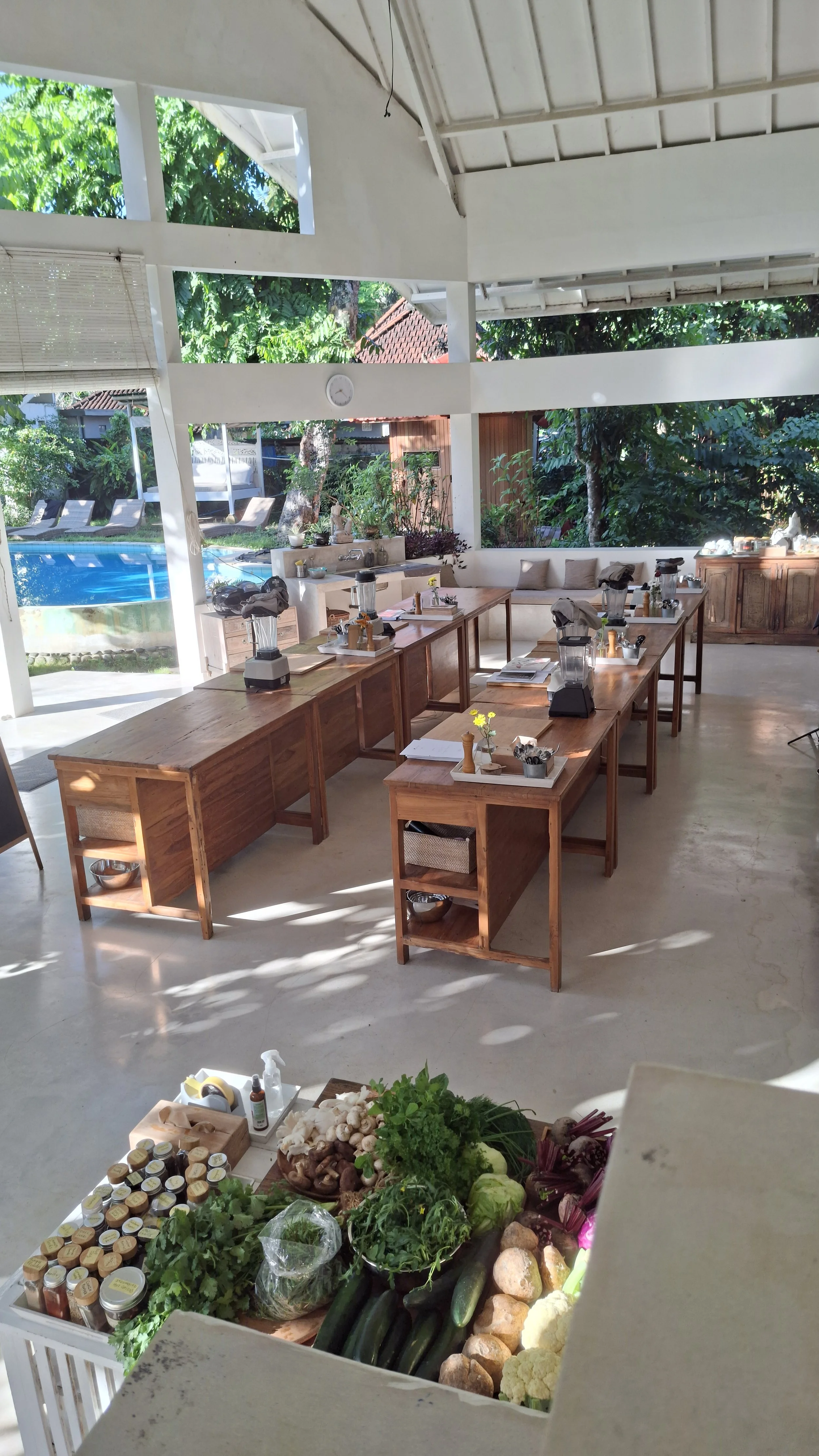
Bali. One Stove Top.
And now: Bali. A small room. One stove top, something that resembles a sink, a fridge. That was my kitchen here.
It is the smallest kitchen I have ever cooked in. And somehow — in between teaching and everything else — it has become the place where I feel most connected to what cooking actually means to me. Not the retreat kitchens with their professional equipment, not the courses with their careful mise en place. This tiny space, just for me, where I feed myself well and badly, where I experiment without an audience, where I make mistakes nobody sees.
And this year, for the first time, I moved in with my partner. A home. A real kitchen — not a shared flat kitchen, not a professional kitchen, not a temporary kitchen. A place where I cook for someone I love, with enough space to do it properly. I did not realise until recently how much I had been missing that.
Having the space — no matter the size — to cook for yourself and for the people you love is how you connect with your heritage.
Not the culinary kind.
The human kind.
Back to Spain
Which brings me back to Spain — where I am right now, having started typing this in Bali.
I have been watching from a distance what is happening there. I will not say much — partly because I do not have the words yet, and partly because I think you already know how it feels to watch a place you call home from far away. The helplessness of it. The love underneath the helplessness.
Home is not where you are from. Home is where you are allowed to feed and be fed. And right now, writing from my own chair, I am holding that thought very carefully.
But there is one thing I do not want to disappear — not for me, and especially not for my nieces. I want them to have the possibility to dream. And to get what they dream. And to do that — to really do that — you need to feel secure. Grounded. Rooted. No matter where you are from. No matter where you live. No matter what religion you practice. No matter your gender. No matter your sexual orientation. No matter your economic status.
That is what Made has. That is what my grandmother had in her kitchen. That is what I am still looking for — in every stove top, in every city, in every place I have called home for a while.
And that is universal. And it has to be protected by law: free Education, access to Health, libre Culture. A place you can call home. These need to be immovable — as immovable as my numbers on social media, as solid as Stonehenge.
It is not negotiable.
And it cannot be a business.
Full stop.
I am a food and experience thinker based between Bali and wherever my work takes me next. I write about food, creativity, and what it means to build something that matters.
Gracias por ser parte de esta cocina en construcción.
Let's keep building, playing, and nourishing — together.
Keep the creative fire going 🔥
Support My Work
If this helped you, consider sharing it with a friend, subscribing to my newsletter, or buying me a coffee. This space is a labor of love—and your support helps me keep building it.