Are We Feeding Our Brains as Well as Our Bodies?
A reflection on creativity, curiosity, and how the experiences we design — from a restaurant to a single dish — can shape how people feel.
Opening
How do I personally create momentum when I feel stuck? Sometimes the question is not how to move forward. Sometimes the real question is:
How do we create momentum when everything feels stuck?
I have been asking myself this question a lot lately.
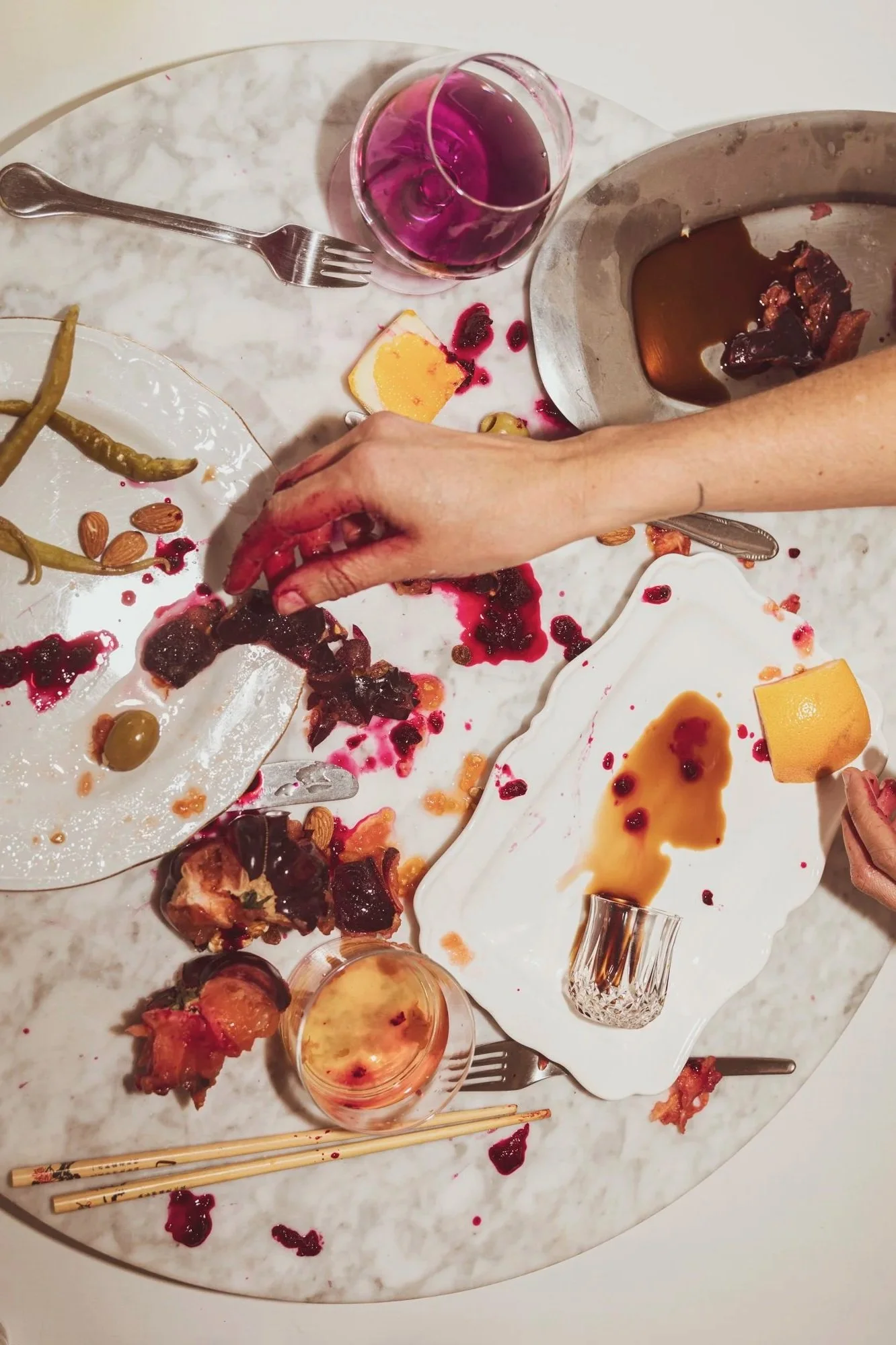
Messiness. Personal Project 2024 (Tenerife)
The Context.
I have been a bit busy recently.
I am finishing a Marketing course — and honestly, I am not even sure why I started it in the first place. Maybe it is my way of trying to understand how everything works. Or maybe it is my way of trying to justify something deeper:
Why does my work feel the way it does?
Why sometimes there is less work than I expected.
Or why the things I care about take so much time to take shape.
At the same time, my last newsletter took an enormous amount of personal energy to write. Much more than you can imagine. Writing it felt like pulling something out of a very deep place. And since then, I have continued working on my personal brand — or whatever this thing is becoming.
Step by step. Using only my own resources. What I know. What I can do with my own hands. Every time I spend a little more time on it, a new shape appears.
And the strange thing is:
That shape seems to be moving slightly away from the kitchen I imagined one year ago. Which is both exciting and a little scary. Because at the same time, this new shape is getting very close to who I was fifteen years ago.
So now I wonder: Am I going in circles? Or am I reconnecting with my actual roots?
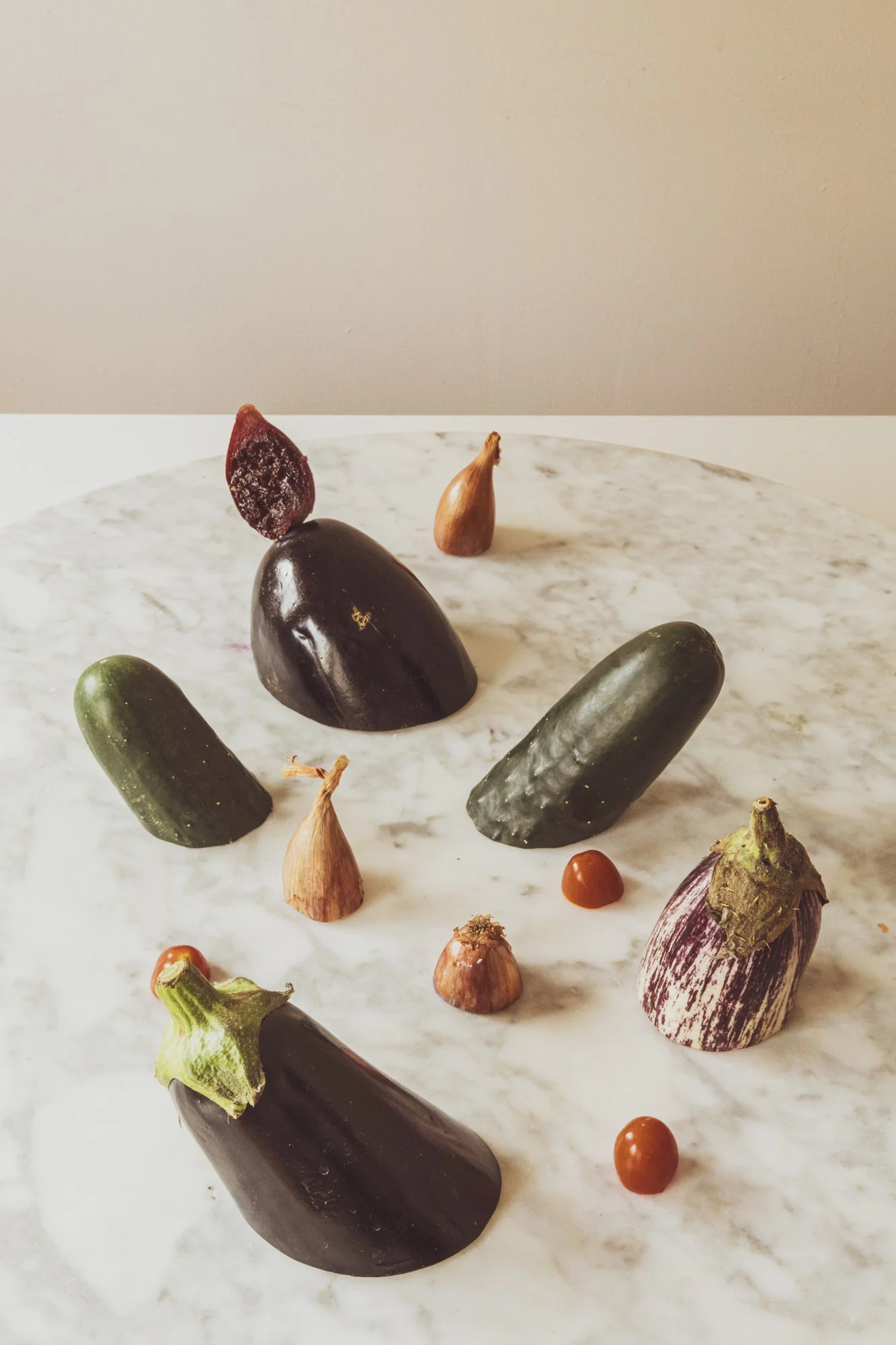
Knifes cuts. Personal Project 2024 (Tenerife)
The Hardness of the Moment.
Everything has been very hard lately: Personally. Professionally. And MORE collectively.
The hardness I feel in my own life seems to run in parallel with the hardness of the world we are living in.
Sometimes beauty still appears. But only in very small moments. Tiny ones. For example, today I discovered something beautiful in a song: a tiny sound inspired by a bird singing (Matinta Perera > 1.45” – Águas de Março by Elis & Tom).
Small. Delicate. Delicious. And maybe that is exactly where momentum begins. Not in big breakthroughs. But in small gestures.
My Way of Creating Momentum
I have been feeling very stuck. Probably people who know me already know this — I have been feeling this way for about four years now.
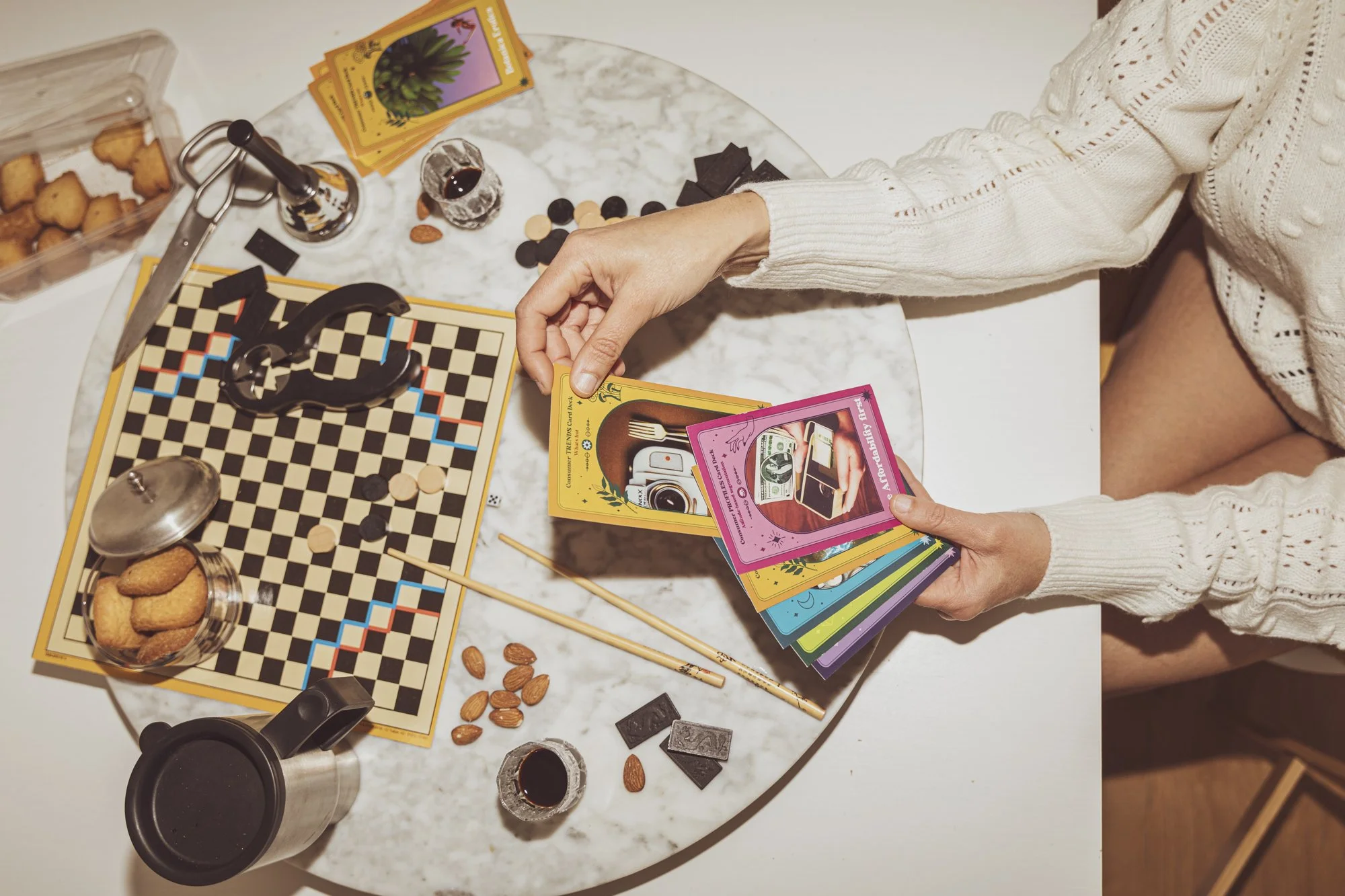
The Plant Challenge Tarot Cards. Personal Project 2024 (Tenerife)
And the only thing that helps me is prototyping ways to move from stuckness to movement. Not solutions. Just movement.
Right now I am working on a beautiful exercise to analyse ideas. It has a temporary name: “Peeling the Onion”: A 30-minute exercise to discover whether your idea is a real project — or not yet. I will share it soon. But first I want to test it with a few volunteers and refine it.
Recently, I have also been using a simple thinking tool that helps me do something similar. It comes from the world of experience design and prototyping, and I adapted it to think about creative projects — including my own. The idea is simple.
Instead of trying to fix the whole project, we design a small experiential arc.
A tiny journey:
State → Experience → Change
This is the same principle used in experience design: thinking about the internal journey someone lives when they enter an idea, interact with it, and leave it. And it works incredibly well for anything related to food, creativity, or hospitality. Because instead of focusing on what we want to create, we focus on what we want someone to feel or experience.
These days — when everything sometimes feels like it is crumbling like a cookie — maybe the real question is this:
What kind of experiences (or algorithms) help human beings OPEN instead of close?
Experiences that help us breathe.
Experiences that help us reconnect.
Experiences that allow something inside us to unfold — like a flower opening.
Because not every system we design does that. Some algorithms nourish curiosity, attention and connection. Others slowly feed anxiety, distraction and emptiness.
So maybe the real design question is:
How do we create experiences that HELP people flourish instead of quietly making them feel worse?
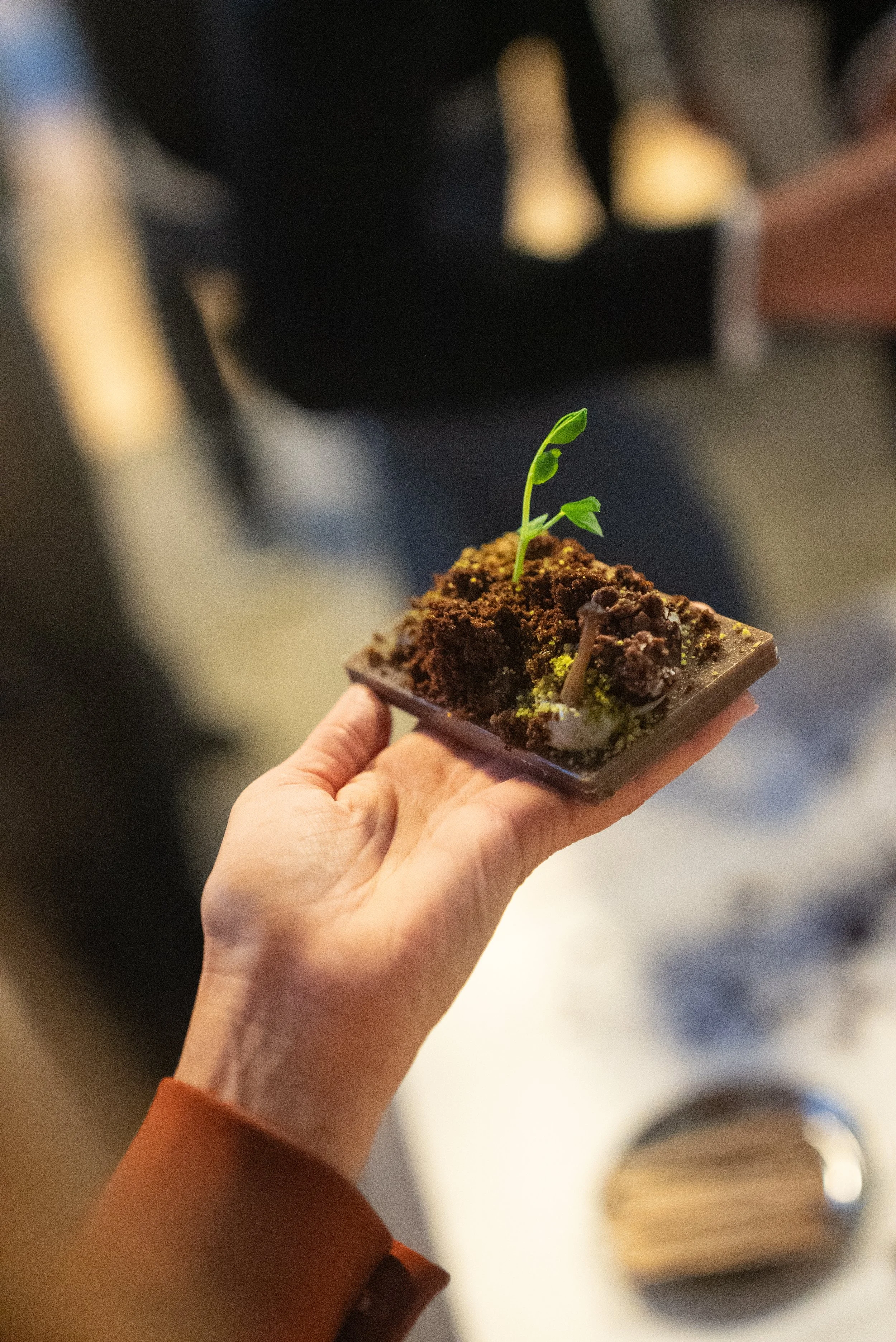
Taking in the Forest. TrendFEST 2023 (Barcelona)
Designing Experiences That Make People Open
This question stayed with me for several days.
Because if experiences — and even algorithms — can influence how people feel, then the next logical question is:
How do we design experiences intentionally?
Not randomly.
Not just based on aesthetics or trends.
But based on the journey someone lives when they encounter what we create.
This is where a very simple framework becomes incredibly useful.
It comes from the world of experience design and prototyping, and I recently started using it to think about creative projects related to food: A menu. A restaurant concept. A workshop. Even a single dish. Because every one of these things is, in the end, an experience. And every experience creates a small internal journey.
It looks like this:
State → Experience → Change
Instead of starting with what we want to create, we begin with a different question: For whom is this experience?
Because without that answer, everything else becomes abstract. Once we know who the experience is for, we can begin to design the journey.
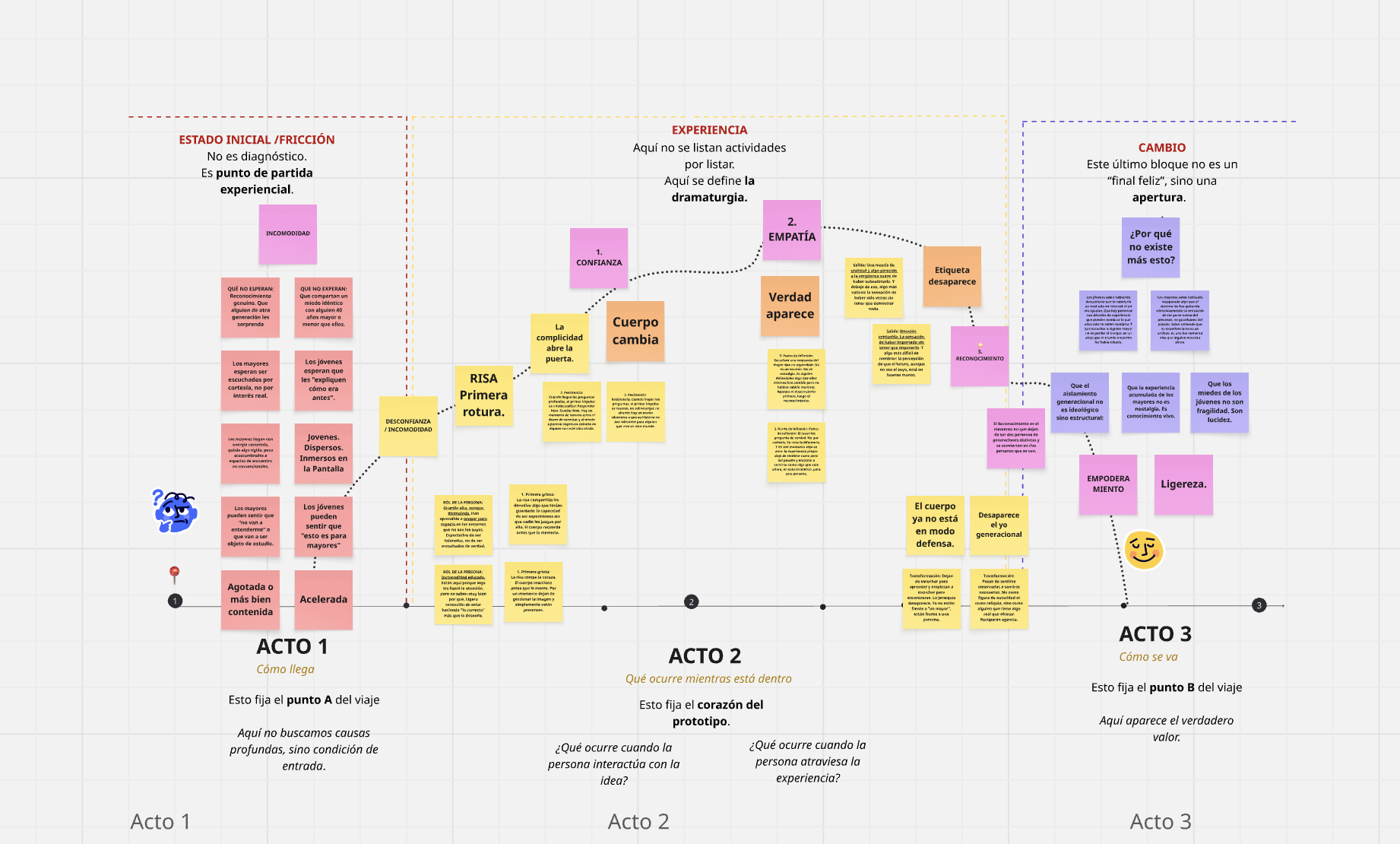
The Experiential Arc. Cris Project 2026 (Barcelona)
The Experiential Arc
The tool is based on three very simple moments:
1. State — How does the person arrive?
What is the emotional or energetic state of the person before the experience begins?
Are they tired? Curious? Distracted? Hungry? Celebrating something? Looking for comfort?
Understanding this starting point is crucial. Because every experience begins from somewhere.
2. Experience — What actually happens?
This is the heart of the design. Not the explanation. Not the concept.
This is how we want to emotionally capture everything we design. It's not about a list of activities, ingredients, or dishes, but about the experience we want our user to have and how we want to guide them from the initial state to the desired state.
3. Change — How do they leave?
And finally: What is different when the experience ends?
Not necessarily something dramatic. But something has shifted. Maybe they feel lighter. Maybe they discovered something new. Maybe they simply want to repeat the experience again. This is the true value of the idea.
Why This Tool Is So Powerful
Because suddenly every decision becomes clearer. If something does not support the journey, it disappears. If something strengthens the experience, it stays. And this works for many things:
Designing a restaurant concept
Structuring a menu
Creating a culinary workshop
Developing a food product
Or even imagining a single dish
Because food is never just food. Food is always an experience someone lives.
Recently I started reading an essay by a chef (Miguel Sánchez Romera) who is also a neurologist. In the first chapter he explains how our brain develops. Around the age of 18 months, our brain begins a long process of development that continues until roughly two to three years of age, when many of the essential structures are fully functioning. From that moment on, he describes the brain with a beautiful metaphor:
Our brain becomes a basket of nets. A structure that we must continue filling throughout the rest of our lives. And this process never really ends. What I loved most in his reflection is this idea:
Our will to know must become stronger than our genetic inheritance.
Curiosity — and the act of searching — are not optional luxuries. They are essential motivations deeply connected to being human.
Because something interesting happens when we begin to search for knowledge: The motivation to know grows at the same time as the search itself. One cannot exist without the other. He summarizes learning in four simple movements:
To feel → to know → to do → to become.
And the key that allows new ideas to enter our brain — and the brain of others — is almost always the same: Emotion.
Emotional memories are powerful because they do two things at the same time: They imagine, and they activate action. Which brings us back to the beginning.
If we want to change the way people think, feel, or behave…The most powerful thing we can do is change the experiences we design.
And the way to do that is simple:
Learn new things.
Create new things.
Design experiences that allow people to open instead of close.
Maybe our job — as cooks, creators, designers of experiences, or as I call myself now, a Creative Thinking Partner for Food Projects (at least until tomorrow) — is simply this:
to help the human brain continue filling its basket of nets.
And coming back to my previous question:
How do we create experiences that help people flourish instead of quietly making them feel worse?
A Human Exchange
Peeling the Onion.
Lately I have been reading that the new “superfoods” are ingredients with exceptionally high nutritional value. And it made me think. We are constantly creating new ways to introduce these ingredients into our diets:
New products.
New recipes.
New functional foods.
Everything designed to nourish the body better than ever before. But my question is this:
Are we doing the same for our brains?
Are we designing experiences that nourish curiosity, attention, imagination, and connection? Or are we just feeding them noise?
Lately I have also been thinking a lot about my own work.
About where I might find clients.
About what direction this path might take.
At first, some of these reflections sounded a bit sad. But after sitting with them for a while, I realised something important:
The satisfaction I feel right now does not come from what I do. It comes from how I do it: From experimenting. From observing. From designing small ways for ideas to become real.
Right now I am testing some of these tools — including the exercise “Peeling the Onion”: A simple framework to explore whether an idea can become a real project. If you are curious to try it, just contact me. I am looking for a few people willing to experiment with me while I refine the process.
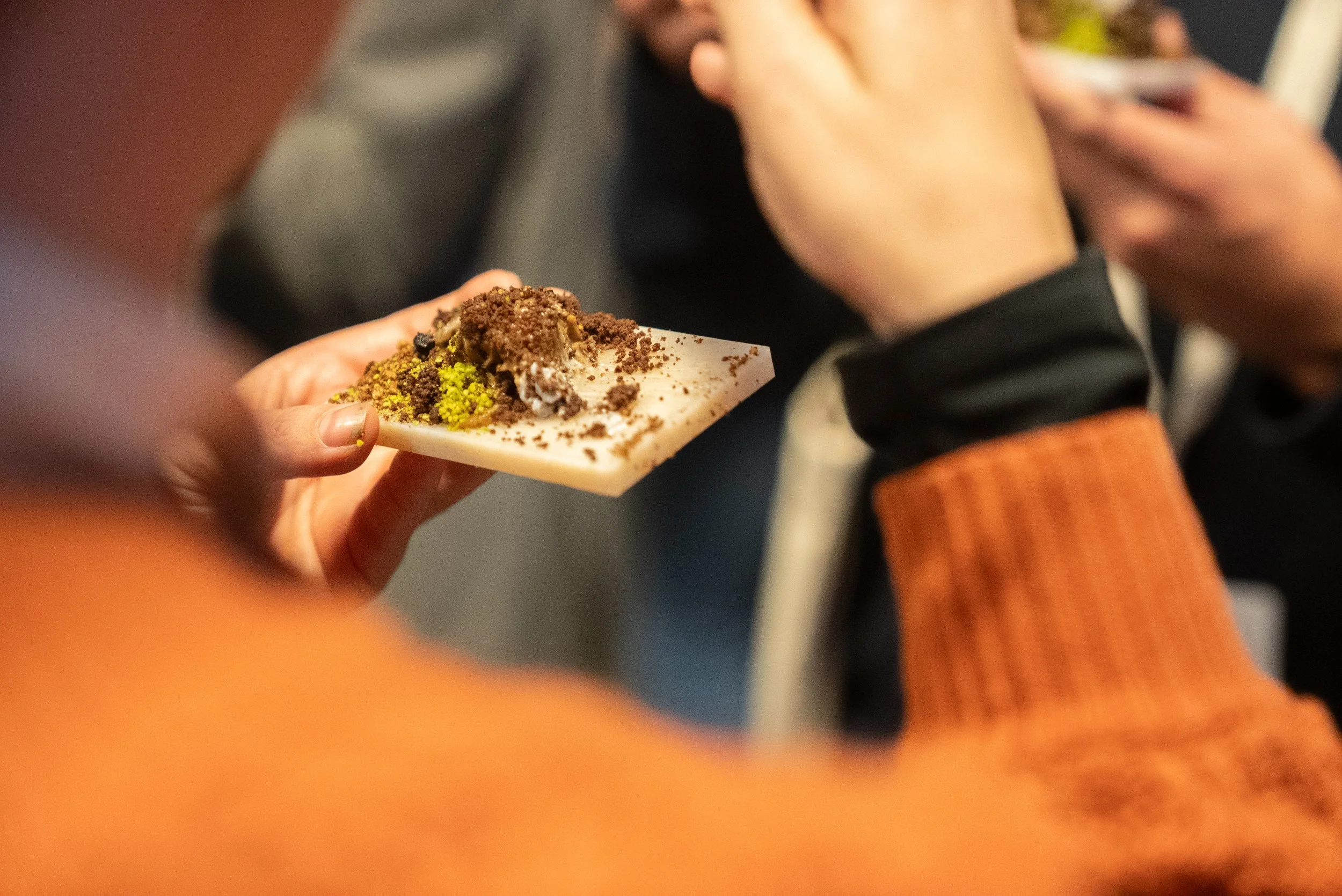
Taking in the Forest. TrendFEST 2023 (Barcelona)
Support My Work
If this helped you, consider sharing it with a friend, subscribing to my newsletter, or buying me a coffee. This space is a labor of love—and your support helps me keep building it.